
Satisfies 1 requirement
3 PCS (20/24/28) Luggage Set, Hardshell ABS+PC with Tsa Lock, Checked Luggage Set
US$11.80-75.00
500 Pieces(MOQ)

I have found results from8000+products and3000+suppliers aboutAmerican standard bags luggage


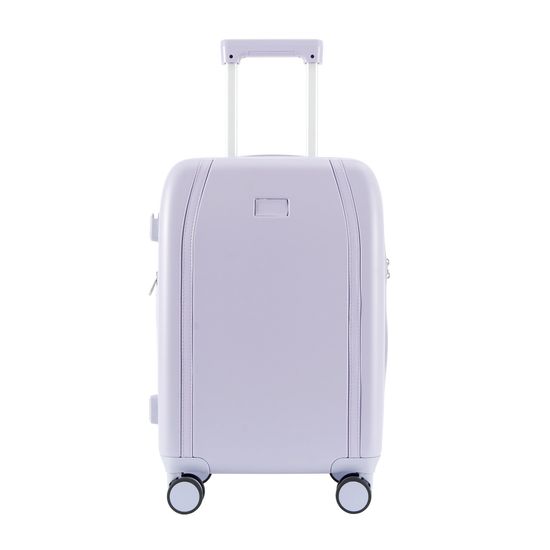


When sourcing, prioritize Polycarbonate (PC) for hardshell luggage due to its high impact resistance and flexibility, or 1680D Ballistic Nylon for softshell bags to ensure superior abrasion resistance. Ensure the zippers are YKK brand or equivalent burst-resistant RC zippers, and the wheels are 360-degree dual-spinner wheels with reinforced axles to handle the weight capacities required by US travel standards.
Suppliers must comply with California Proposition 65 regarding lead and phthalate content in plastics and coatings. For smart luggage, ensure UN38.3 certification for lithium batteries and FCC compliance for electronic components. Additionally, all locks must be TSA-approved (Travel Sentry Certified) to allow security inspections without damage to the product.
High-quality American standard luggage should feature multi-stage telescopic handles made of high-grade aluminum to prevent wobbling. Internal compartments should include waterproof wet/dry pockets, compression straps with heavy-duty buckles, and RFID-blocking pockets for travel document security. For business-class luggage, a dedicated padded laptop sleeve capable of holding a 15.6-inch device is a standard requirement.
Request a Drop Test Report (usually 1m height at full load), a Telescopic Handle Cycle Test (minimum 5,000 cycles), and a Mileage Test for wheels (minimum 30km on uneven surfaces). For softshell bags, a Colorfastness to Rubbing (ISO 105-X12) report is essential to ensure the dye does not transfer to the traveler's clothing.
Utilize third-party pre-shipment inspections (PSI) to verify that the AQL (Acceptable Quality Level) meets your standards, specifically checking for seam strength and zipper smoothness. Always conduct transactions through secure channels; for instance, Made-in-China.com offers secured payment services that protect your funds until the shipping documents are verified.
Negotiate based on Total Cost of Ownership (TCO) rather than just the unit price. Ask for tiered pricing (e.g., 500, 1000, and 5000 units) and request spare parts (2% extra wheels and handles) to be included in the bulk price to handle future warranty claims. Emphasize long-term partnership potential to secure OEM/ODM customization at lower costs.
Luggage is a high-volume, low-weight product, so shipping 'nested' (smaller bags inside larger ones) is critical to optimize container space and reduce freight costs. Ensure your supplier provides an accurate HTS Code (typically 4202.12) to avoid customs delays and ensure correct duty calculation under current US trade policies.
Verify the supplier's Business License and Export Qualification. On platforms like Made-in-China.com, look for 'Audited Suppliers' who have undergone on-site verification by independent agencies like SGS or Bureau Veritas. This ensures the factory actually has the production capacity and machinery they claim to possess.