
Satisfies 1 requirement
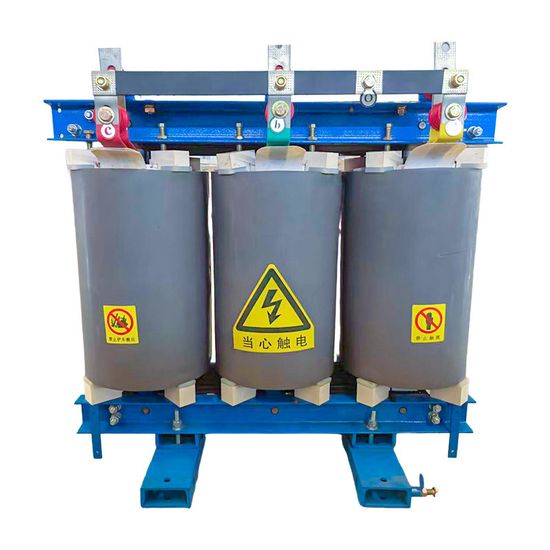
Premium Power Supply Transformer with Advanced Cooling for Audio Amplifier
US$200.00
1 Piece(MOQ)

I have found results from50000+products and10000+suppliers aboutAudio transformer




When sourcing audio transformers, the most critical technical factor is Frequency Response, typically requiring a range of 20Hz to 20kHz for high-fidelity applications with minimal decibel loss. You must also verify the Impedance Matching ratio (e.g., 600:600 ohms for isolation or 10k:600 ohms for step-down) to ensure signal integrity. Additionally, pay attention to Total Harmonic Distortion (THD); high-quality units should maintain THD < 0.1% at rated power. For professional environments, ensure the use of Mu-metal shielding to prevent electromagnetic interference (EMI) and hum.
The core material is the heart of the transformer; Nickel-alloy (Permalloy) cores are preferred for low-level signals due to high permeability, while Silicon Steel is suitable for high-power output transformers. Check the winding technique, specifically looking for bifilar or sectional winding to reduce leakage inductance and stray capacitance. Ensure the insulation meets Class B (130°C) or Class F (155°C) standards to guarantee long-term thermal stability under continuous load.
For global market access, products must adhere to RoHS (Restriction of Hazardous Substances) and REACH to ensure environmental safety. If the transformer is part of a powered system, UL or CE certification is essential for safety compliance. For telecommunication-grade audio transformers, check for alignment with IEEE standards or specific ITU-T recommendations regarding isolation voltage, which should typically be at least 1000V AC or higher for safety isolation.
Impedance Matching Transformers are essential for connecting high-impedance microphones to low-impedance mixer inputs. Isolation Transformers (1:1 ratio) are widely used in broadcast and live sound to eliminate ground loops and hum. Output Transformers are critical in tube amplifiers to match high-voltage tube circuits to low-impedance speakers. For industrial paging systems, Constant Voltage Transformers (70V/100V) are the standard for long-distance speaker distribution.
Always request a Golden Sample for lab testing before authorizing mass production. Utilize third-party inspection services like SGS or Intertek to perform Hi-Pot (High Potential) testing and frequency sweep analysis at the factory. On platforms like Made-in-China.com, prioritize Audited Suppliers who provide comprehensive factory inspection reports and have a proven track record in electronic component manufacturing.
Negotiate based on Volume-Tiered Pricing; for electronic components, a 10,000-unit order can often reduce costs by 20-40% compared to small batches. Discuss Lead Time Guarantees, as raw materials like copper wire and specialized core alloys can have fluctuating availability. Ensure the contract specifies a Defect Rate Threshold (e.g., <0.5%) with a clear agreement on replacement or refund for non-conforming goods.
Audio transformers are heavy and sensitive to moisture and magnetism. Ensure the supplier uses Vacuum Packaging with Desiccants to prevent oxidation of the leads. For air freight, confirm that the packaging complies with IATA Magnetized Material Regulations if the magnetic field strength exceeds specific limits. Use reinforced double-wall corrugated boxes with internal foam dividers to prevent physical deformation of the transformer frames during transit.
Utilize Secured Payment services provided by reputable B2B platforms to ensure funds are only released upon proof of shipment. Stay informed on HS Code classification (typically under 8504.31) to accurately calculate import duties and VAT. For large-scale procurement, consider FOB (Free On Board) terms to maintain better control over your logistics costs and insurance coverage compared to CIF.