
Satisfies 1 requirement
Pressurized Evacuated Tube Solar Collector Water Heater for Hotel Outdoor Project
US$70.00-150.00
10 Sets(MOQ)

I have found results from4000+products and1000+suppliers aboutEvacuated tube solar collector


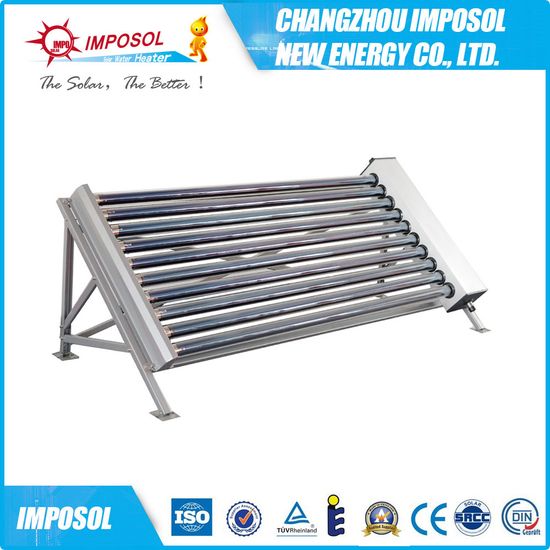


Buyers should prioritize borosilicate glass 3.3 for the tubes to ensure high thermal shock resistance and durability. The absorption rate should be ≥94%, while the emission rate should be ≤6% to maximize efficiency. For pressurized systems, ensure the heat pipes are made of high-purity oxygen-free copper to prevent corrosion and facilitate rapid heat transfer. Additionally, check the manifold insulation, which should ideally be high-density polyurethane or rock wool to minimize heat loss in cold climates.
To ensure quality and eligibility for government incentives, products must hold Solar Keymark (EN12975/12976) for the European market or SRCC (OG-100) for North America. For general quality management, the supplier must be ISO 9001 certified. If the collector is part of a potable water system, verify that the materials used meet NSF/ANSI 61 or equivalent food-grade standards to prevent water contamination.
The collector must be able to withstand harsh environmental conditions. Request hail resistance test reports, typically certifying survival against 25mm diameter hail at speeds of 23 m/s. The frame and manifold casing should be constructed from anodized aluminum alloy or stainless steel (SUS304/316) to prevent rusting in coastal or high-humidity areas. Ensure the vacuum level inside the tubes is P < 5x10⁻³ Pa to guarantee long-term insulation performance.
Evacuated tube collectors are ideal for high-temperature applications (60°C to 120°C) and perform better than flat-plate collectors in cold or cloudy climates. For industrial use, ensure the system supports serial/parallel manifold integration. For residential use, confirm compatibility with split-pressurized or thermosiphon systems. Buyers should also verify if the supplier provides mounting brackets suitable for specific roof types, such as flat concrete or pitched tile roofs.
Glass tubes are highly fragile. You must mandate reinforced export packaging, including individual EPE foam sleeves for each tube and five-layer corrugated boxes secured on fumigated wooden pallets. It is highly recommended to purchase Marine Insurance (All Risks) and include a 2-3% spare tube allowance in the initial order to cover potential transit breakage without delaying project timelines.
Focus on the Total Cost of Ownership (TCO) rather than just the unit price. Negotiate for extended warranties (typically 5-10 years) and request OEM/ODM services for branding on the manifold. For bulk orders, aim for a 10-15% discount on quantities exceeding a full 40HQ container. Use Made-in-China.com's Secured Trading services to ensure payment is only released upon verification of shipping documents.
Always conduct a factory audit or hire a third-party inspection agency (like SGS or Intertek) to perform a Pre-Shipment Inspection (PSI). This ensures the vacuum tubes' coating and copper pipe welding meet the agreed-upon specs. Use Letter of Credit (L/C) for large transactions or Telegraphic Transfer (T/T) with a 30% deposit and 70% balance against the Bill of Lading (B/L) to protect your capital.
Be aware of Anti-Dumping (AD) and Countervailing Duties (CVD) that some regions apply to solar products. Check your local Harmonized System (HS) Code (typically 8419.19 or 8419.90) to determine import tariffs. Many countries offer VAT exemptions or green energy subsidies for certified solar collectors; ensure the supplier provides a Certificate of Origin (CO) to help you claim these benefits.