
Satisfies 1 requirement
Centrifugal Casting Reformer Tube Used for Conversion Furnace
US$300.00-3,000.00
1 Piece(MOQ)

I have found results from1000+products and300+suppliers aboutReforming furnaces price


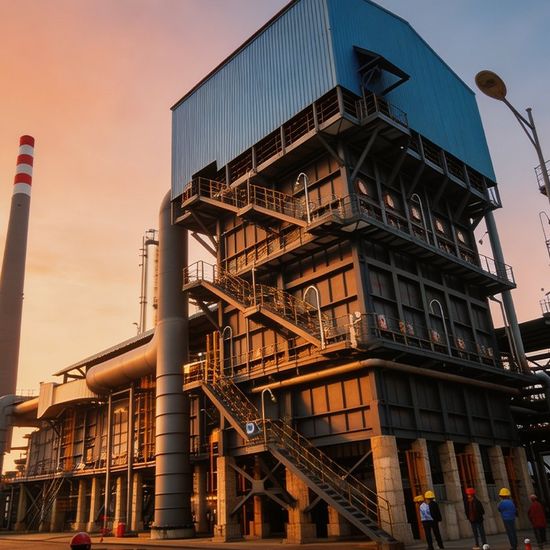


When assessing the price of a reforming furnace, you must look beyond the initial quote and evaluate thermal efficiency (typically >90% with heat recovery), tube material grade (e.g., HP40Nb or 25/35 CrNi micro-alloy), and burner NOx emission levels. High-quality furnaces utilize centrifugally cast tubes which offer superior creep resistance at temperatures exceeding 900°C. Ensure the price includes refractory lining thickness and density, as these directly impact heat loss and long-term operational costs.
Reforming furnaces are high-pressure, high-temperature vessels that must adhere to strict international standards. Prices will vary significantly based on compliance with ASME Section VIII (Pressure Vessels), API 560 (Fired Heaters for General Refinery Service), and PED 2014/68/EU for the European market. A lower price often indicates a lack of third-party inspections (e.g., SGS, TUV) or non-compliance with SIL (Safety Integrity Level) ratings for the Burner Management System (BMS), which are critical for operational safety.
Standardized designs are cheaper but may not fit your specific feedstock (Natural Gas, Naphtha, or LPG). Modular construction (pre-assembled skids) may have a higher purchase price but significantly reduces on-site installation time and labor costs by up to 40%. You should verify if the price includes catalyst loading systems, waste heat recovery units (WHRU), and automated control systems (PLC/DCS integration).
A professional sourcing strategy accounts for the Life Cycle Cost (LCC). Inquire about the expected lifespan of the reformer tubes (ideally 100,000 hours) and the ease of decoking procedures. Suppliers offering integrated tube skin temperature monitoring systems and infrared inspection ports provide better value, as these features prevent premature tube failure and unplanned shutdowns.
For high-capital equipment like reforming furnaces, always use Secured Trading Services provided by reputable platforms like Made-in-China.com. Utilize Letter of Credit (L/C) or staged payments (30-40-20-10) tied to specific milestones: 1. Down payment, 2. Completion of main structure, 3. Successful Factory Acceptance Test (FAT), and 4. Final delivery. Never transfer full payment before third-party quality verification.
Reforming furnaces often involve Out-of-Gauge (OOG) cargo. Ensure the supplier provides a detailed packing list and shipping plan involving Flat Rack or Breakbulk shipping. Confirm who is responsible for export customs clearance and heavy-lift crane charges at the port. It is highly recommended to use CIF (Cost, Insurance, and Freight) terms where the supplier manages the complex logistics to your nearest port, ensuring the equipment is covered by comprehensive marine insurance.
Negotiate for a performance guarantee period (usually 12-24 months) and the inclusion of a two-year operational spare parts package in the initial price. Demand a Service Level Agreement (SLA) that defines response times for technical troubleshooting. For complex installations, insist on the supervision of installation and commissioning (SIC) by the manufacturer's engineers to be included in the contract to avoid warranty disputes.
Beyond the commercial invoice and bill of lading, you must secure the Manufacturer’s Data Report (MDR), Material Test Reports (MTRs) for all pressure-retaining parts, Weld Map and NDT (Non-Destructive Testing) reports, and Certificate of Origin. For specific regions, ensure the supplier provides dossiers translated into the local language to satisfy regulatory health and safety inspectors.