
Satisfies 1 requirement
Hot Selling Manufacturer Product India Refrigerant Gas R415b Price
US$22.99-35.99
1,150 Pieces(MOQ)

I have found results from50000+products and20000+suppliers aboutRefrigerant gas price




Buyers must prioritize purity levels, which should ideally be ≥99.9% to prevent compressor damage and ensure cooling efficiency. Key parameters include moisture content (≤10ppm), acidity (≤1 ppm), and non-condensable gas volume (≤1.5%). Always request a Certificate of Analysis (COA) for every batch to verify these chemical properties against AHRI 700 standards.
Procurement must align with the Montreal Protocol and the Kigali Amendment. High-GWP (Global Warming Potential) gases like R22 are being phased out in many regions. Buyers should transition to HFCs (like R134a, R410A) or next-generation HFOs (like R1234yf) depending on their local government's environmental compliance schedule and import quota systems.
Suppliers must provide a Material Safety Data Sheet (MSDS) and a UN Number for transport. For the cylinders themselves, look for DOT (USA), CE/TPED (Europe), or KGS (Korea) certifications. Ensure the supplier is ISO 9001 certified for quality management and ISO 14001 certified for environmental management to ensure stable production standards.
Counterfeit refrigerants often contain hazardous mixtures. To mitigate risk, use pressure-temperature (P-T) charts to verify gas behavior during sampling. Check for holographic security labels on cylinders and verify the refillable vs. non-refillable status based on your country's laws. Sourcing from Audited Suppliers on Made-in-China.com provides an extra layer of verification regarding the manufacturer's factory scale and legitimacy.
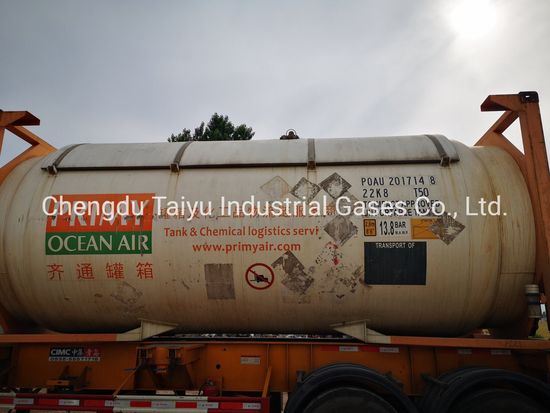
Refrigerant gases are classified as Class 2.2 (Non-flammable, non-toxic gases) or Class 2.1 (Flammable gases). They must be shipped in UN-certified cylinders via Dangerous Goods (DG) containers. Buyers must ensure the freight forwarder is licensed to handle DG cargo and that the IMO Declaration is accurately filed to avoid port seizures or heavy fines.
Refrigerant prices fluctuate based on raw material costs (fluorspar) and seasonal demand. It is advisable to sign long-term framework agreements with price adjustment clauses or utilize bulk purchasing (20ft FCL) to reduce the per-unit shipping cost. Always ask for FOB pricing to maintain control over the logistics chain and insurance.
Use Secured Payment services offered by platforms like Made-in-China.com to ensure funds are only released upon proof of shipment. For first-time orders, it is highly recommended to hire a third-party inspection agency (like SGS or Intertek) to perform a pre-shipment inspection (PSI) to verify cylinder weight, gas purity, and packaging integrity.
Many countries (including the EU and Australia) have banned non-refillable (disposable) cylinders. Importing these can lead to customs rejection and mandatory re-exportation at the buyer's expense. Always confirm if your destination country requires refillable cylinders with recovery valves before finalizing the purchase order.