

Wholesale binoculars lens
I have found results from20000+products and8000+suppliers aboutWholesale binoculars lens
Commonly Used:
US$
—
Customization Available
Sample Available
Manufacturer First
Product Attributes:
Type: Monocular
Type: Convex Lens
Type: Stereomicroscope
Type: Biological
Type: Binocular
Type: Concave Lens
Type: CCTV Camera
Usage: Optical
Transmittance: >95%
Lenses Color: Clear
Certification: RoHS
Customized: Customized
Shape: Ball, Hemisphere
Material: Optical Glass
Magnification: 10X
Function: Waterproof
Structure: Refractor Telescope
Lens Type: Zoom Lens
Lens: Glass
Objective Aperture: 30~50mm
Focusing Type: Center Focusing
Coating: HMC
Number of Cylinder: Binoculars
Mobility: Desktop
Stereoscopic Effect: Stereoscopic Effect
Kind of Light Source: Ordinary Light
Principle: Optics
Principle of Optics: Polarizing Microscope
Aperture: <50mm
Technology: Wireless
Style: Pan/Tilt
Sensor: CMOS
Waterproof / Weatherproof
Effective Distance: 10-30m
Sensor Size: 1/3 inch
Usage: Photography
Usage: Gift
Usage: Bird Watching/Hunting
Usage: Toy
Usage: Travel
Usage: Lighting
Usage: Medical
Usage: Teaching
Usage: Research
Usage: Astronomical
Transmittance: 90%-95%
Certification: CE
Certification: ISO9001
Certification: FCC
Certification: EMI/EMC
Customized: Non-Customized
Shape: Single-lens
Shape: Drum-shaped Lens
Cylindrical Shaped Lens
Shape: Rectangular Prism
Shape: Laminated Lenses
Material: Glass
Magnification: <50X
Magnification: 7X
Magnification: 8X
Magnification: 50-100X
Function: Fogproof
Structure: Catadioptric Telescope
Lens Type: Prime Lens
Objective Aperture: >50mm
Focusing Type: Internal Focusing
Coating: HC
Coating: UV
Differential Interference Contrast Microscope
Aperture: >200mm
Feature: High Definition
Feature: Mini Size
Feature: Vandal-proof

Satisfies 1 requirement
Binoculars Riflescope Sight Optical Reticule Lenses Etched Glass Reticle
US$3.00-5.00
20 Pieces(MOQ)

Satisfies 1 requirement
Customized 22X33mm Ar+Hr Coating Lenses with Reflective and Anti-Reflective
US$0.50-5.00
200 Pieces(MOQ)

Satisfies 1 requirement
Security Wireless Lens Detection Ai Human Track Binocular Smart CCTV Security Camera Smart Home Doorbell Lens Smart Life Home Wholesale Fixed Lens
US$3.67-6.84
1 Piece(MOQ)

Satisfies 1 requirement
Onick Black Hawk 10X50ED Binocular Rangefinder Telescope Reconnaissance Type High Magnification Large Aperture Objective Lens
Negotiable
1 Piece(MOQ)

Satisfies 1 requirement
3X Objective Lens Monocular and Binocular Night Vision Afocal Lens
US$100.00-160.00
1 Piece(MOQ)

Satisfies 1 requirement
Ttl Magnifier Dental Medical Binocular Magnifier Lens
US$148.00-148.90
1 Set(MOQ)

Satisfies 1 requirement
Optical Lens with 3X Magnification for Night Vision Monocular/Goggle/Binocular
Negotiable
10 Pieces(MOQ)

Satisfies 1 requirement
Advanced Optical Night Vision Binoculars with Coated Lenses
US$10.00-150.00
1 Piece(MOQ)

Satisfies 1 requirement
Optical Biological/Binocular Microscope Bi-Convex Single Lens for Spotting Scope
US$5.00-48.00
1 Piece(MOQ)

Satisfies 1 requirement
Premium 1mm Cemented Lenses for Microscopes and Binoculars
US$3.00-15.00
1 Piece(MOQ)

Satisfies 1 requirement
Optical Sapphire Aspheric Lens for Battery Commander's Telescope/Tripod-Mounted Binocular
US$15.00-110.00
1 Piece(MOQ)

Satisfies 1 requirement
0.5X 1.5X 2X Auxiliary Lens for Stereo Zoom Microscope
US$1.00-2.00
1 Piece(MOQ)

Satisfies 1 requirement
0.3X 0.5X 0.7X 0.75X 1.5X 2X Auxiliary Lens Stereo Microscope
US$1.00-2.00
1 Piece(MOQ)

Satisfies 1 requirement
195 Semi-Plan Achromatic Objective Lens for Biological Optical Microscope
US$1.00-10.00
1 Piece(MOQ)

Satisfies 1 requirement
Factory Price Hot Sale 7X Magnification Army Green Binoculars, 50mm Large Objective Lens, for Hunting & Bird Watching
US$7.50-9.99
20 Pieces(MOQ)

Satisfies 1 requirement
18mm UV Fused Silica Achromatic Doublet Lens for Binoculars
US$4.20-8.00
1 Piece(MOQ)

Satisfies 1 requirement
Wholesale Optical Meniscus Spherical Lens for Binocular
US$1.00-100.00
50 Pieces(MOQ)

Satisfies 1 requirement
8X40 Binoculars Long Range Folding Compact Bak4 Fmc Lens Optics for Hunting Sports Outdoor Camping Travel
US$9.39-10.99
100 Pieces(MOQ)

Satisfies 1 requirement
Aluminum Objective Lens Interface Diameter 20.2mm40X 100X Optical Glass Lens
US$8.00-9.90
10 Pieces(MOQ)

Satisfies 1 requirement
Vy Professional Ultra High Definition 300X Zoom Long Distance Telescope Lens Premium Binoculars
US$2,000.00
1 Piece(MOQ)

Satisfies 1 requirement
Advanced Monocular Stereo Zoom Lens for Microscopic Imaging
US$420.00
1 Piece(MOQ)

Satisfies 1 requirement
Customized Optical Lab Physical Teaching Binoculars Laser Colimator Bi-Concave Lens with Ar Coated
US$1.00-5.00
10 Pieces(MOQ)

Satisfies 1 requirement
Dia10" 250mm AR Coated Optical Achromatic Doublets Cemented Glued Lens Achromatic Customize Focal Length for Telescope/Binocular/Microscope
US$99.00
1 Piece(MOQ)

Satisfies 1 requirement
Security 2.4GHz WiFi Dual Lens Indoor with Night Vision and Motion Detection Ai Human Track Binocular Smart CCTV Security Camera
US$10.00-11.90
1 Piece(MOQ)

Satisfies 1 requirement
Customized Lens assy for Projector, Telescope, Microscope, Binocular, Ophthalmic Instrument, Spectrometer
US$1,130.00
5 Pieces(MOQ)

Satisfies 1 requirement
Versatile Achromatic Lens for Binoculars and Monocular Applications
US$11.00-16.00
100 Pieces(MOQ)

Satisfies 1 requirement
High Quality Plano Convex 0.5X Bk7 Optical Glass Objective Lens Binocular Microscope Anti-Reflective Coating Manual Focus Lens
US$30.00-50.00
10 Pieces(MOQ)

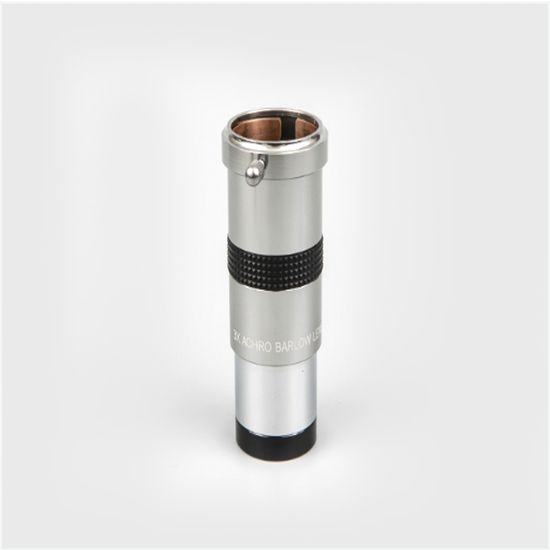
Sourcing guidance for Wholesale Binoculars Lens
What technical specifications are critical when sourcing wholesale binoculars lenses?
Buyers must prioritize optical glass quality, specifically looking for Bak-4 prisms over Bk-7 for superior light transmission and edge-to-edge clarity. The lens coating is equally vital; ensure the supplier provides Fully Multi-Coated (FMC) optics to minimize reflection and maximize brightness. Additionally, verify the objective lens diameter and magnification power to ensure they meet the specific needs of your target market, whether for birdwatching, marine use, or tactical applications.
How can I verify the durability and environmental resistance of the lenses?
For outdoor and professional use, ensure the lenses are Nitrogen-purged and O-ring sealed to provide IPX7 waterproof and fog-proof performance. Request documentation on shock resistance testing to ensure the internal lens alignment (collimation) remains intact during transit and heavy field use. High-quality wholesale lenses should also feature a scratch-resistant coating on the external surfaces to prolong product lifespan.
What compliance standards and certifications should I look for?
Ensure the manufacturer adheres to ISO 9001 for quality management systems. For specific markets, check for RoHS compliance to ensure the absence of hazardous substances in the glass and coatings. If the binoculars include electronic components (like rangefinders), CE and FCC certifications are mandatory for the EU and US markets respectively. Always ask for third-party inspection reports from agencies like SGS or TUV.
How do I evaluate the economic feasibility of a bulk lens order?
Calculate the Total Cost of Ownership (TCO) by factoring in the unit price, customs duties, and specialized optical packaging costs required to prevent breakage. Seek suppliers on Made-in-China.com that offer tiered pricing; typically, increasing order volume from 100 to 1,000 units can reduce the per-unit cost by 15-25%. Don't forget to account for the cost of sample validation, which is a non-negotiable step in optical procurement.
Cross-Border Procurement Strategy for Optical Instruments
What are the primary risks when importing optical lenses internationally?
The biggest risks are optical misalignment (collimation issues) caused by rough handling during transit and moisture ingress due to poor sealing. To mitigate this, use specialized shock-absorbent packaging and choose shipping methods with climate-controlled environments. Always utilize Trade Assurance services on platforms like Made-in-China.com to protect your payment until the quality is verified upon arrival.
How should I negotiate with suppliers to ensure long-term quality consistency?
Negotiate a Quality Agreement that specifies the allowable defect rate (AQL levels); for precision optics, an AQL of 1.0 or 1.5 for major defects is standard. Discuss long-term supply stability to ensure that future batches use the same glass melt and coating formulas. Request a dedicated account manager and clear warranty terms (ideally 2-5 years) for manufacturing defects.
What is the best method for shipping sensitive optical equipment to my country?
For high-value wholesale lenses, Air Freight is preferred over Sea Freight to reduce the duration of exposure to humidity and mechanical vibration. Ensure the bill of lading is marked as 'Fragile: Precision Optical Instruments'. If using Sea Freight, insist on vacuum-sealed moisture-proof bags and desiccants inside every master carton to prevent fungal growth on the lens coatings during the voyage.