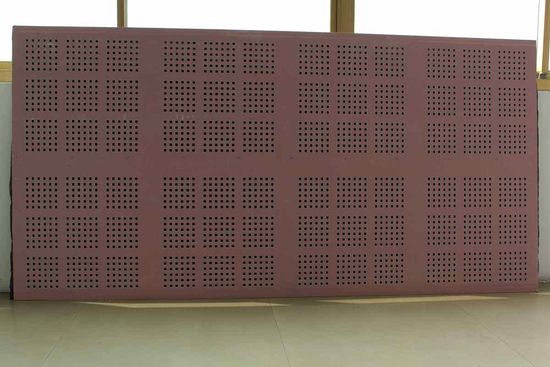
Decorative Gypsum Wall Board with PVC Surface 1200*2400*12.5mm

1200*2400*12.5mm Perforated Gypsum Plaster Board

12.5mm Thick Perforated Gypsum Ceiling Board 1200X2400mm

I have found results from400+products and200+suppliers about12.5mm gypsum board price


When sourcing 12.5mm gypsum board, you must prioritize core density and paper-to-core adhesion. A high-quality board should have a density of approximately 800-900 kg/m³ to ensure structural integrity. Key performance metrics include flexural strength (breaking load), which should meet ASTM C1396 or EN 520 standards. Additionally, verify the edge profile (tapered or square) to ensure it matches your installation requirements for seamless jointing.
The 12.5mm thickness is a standard for partitions and ceilings, but the environment dictates the subtype. For bathrooms or kitchens, specify Moisture-Resistant (MR) boards with silicone oil additives. For public buildings or high-occupancy areas, choose Fire-Rated (Type X) boards which contain glass fibers and vermiculite to maintain structural stability under heat. For soundproofing in offices or hotels, look for Acoustic boards with a higher mass core.
To ensure safety and market entry, products must carry CE marking for the European market or UL/ASTM certification for North America. Ensure the supplier provides ISO 9001 for manufacturing consistency and ISO 14001 for environmental management. For green building projects, request VOC emission test reports and LEED certification support to prove the product is safe for indoor air quality.
Request a third-party inspection (such as SGS or Intertek) to perform a 'drop test' and 'nail pull resistance test.' Check for surface flatness and thickness tolerance, which should not exceed ±0.5mm. Inspect the packaging and palletization; gypsum boards are fragile and require moisture-proof plastic wrapping and reinforced edge protectors to prevent breakage during sea freight.
The biggest risk is physical damage and moisture absorption during transit. Gypsum is hygroscopic; if the container has leaks, the boards will warp or grow mold. Mitigation involves using Full Container Load (FCL) shipping rather than LCL to reduce handling, and ensuring the supplier uses desiccants and heavy-duty pallets. Always secure Marine Insurance that covers 'All Risks' to protect against breakage.
Pricing for gypsum board is highly sensitive to raw material costs (natural gypsum vs. desulfurized gypsum) and energy prices. Negotiate based on volume tiers, as orders exceeding 5 containers often qualify for a 5-10% discount. For payment, use Letter of Credit (L/C) or Trade Assurance to ensure the supplier meets the shipping deadline and quality specs before funds are released. For the most reliable sourcing, I recommend searching for verified manufacturers on Made-in-China.com.
Gypsum boards are heavy and low-value, making freight costs a significant portion of the Landed Cost. Optimize the container load by mixing different board lengths if possible to maximize space. Ensure the Harmonized System (HS) Code 680911 is used correctly for customs declaration to avoid delays. Be aware of anti-dumping duties that some countries (like the US or certain EU nations) may impose on Chinese gypsum products; always check your local trade policy first.