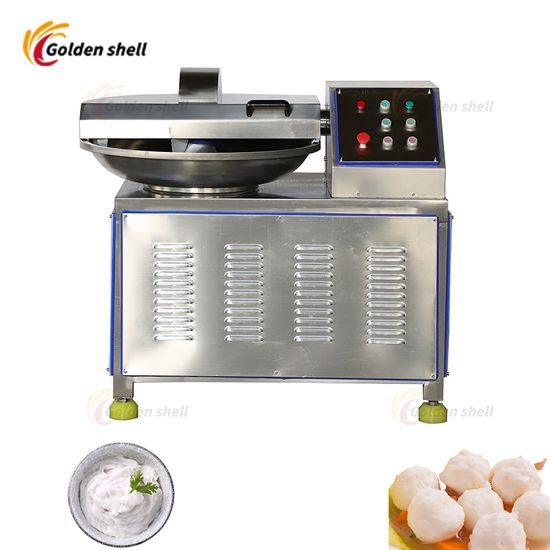
Bowl Cutter Bowl Chopper for Sausage Production

Bowl Cutter/Chopper for Meat Processing

High Speed Meat Bowl Cutter Bowl Chopper

I have found results from400+products and200+suppliers aboutBowl chopper blades factory


Professional-grade blades must be manufactured from high-carbon stainless steel (such as 420J2 or 440C) or specialized German Krupp steel (1.4116). The material must undergo vacuum heat treatment to achieve a Rockwell hardness (HRC) of 55-60. This ensures the blades maintain a razor-sharp edge while remaining resistant to chipping or snapping during high-speed rotation (up to 5,000 RPM).
When sourcing from a factory, verify that the products comply with FDA (US) or LFGB (EU) food contact regulations. The factory should provide ISO 9001 certification for quality management and Material Test Reports (MTR) to prove the chemical composition of the steel. Ensure the blades are corrosion-resistant to withstand harsh cleaning chemicals and saline environments common in meat processing.
Look for blades that have undergone dynamic balancing tests. Precision-ground blades with a thickness tolerance of ±0.02mm are vital to prevent mechanical wear on the chopper's shaft. Additionally, the cutting edge geometry (e.g., sickle shape vs. straight edge) should be optimized for the specific meat emulsion type to minimize heat friction, which preserves the protein structure of the food.
Top-tier factories should offer OEM/ODM services and be capable of producing blades compatible with major brands like Seydelmann, Laska, or Alpina. You should provide the factory with technical drawings (CAD/PDF) or physical samples. Ensure the mounting hole dimensions and bolt patterns are precision-machined to avoid catastrophic failure during operation.
The biggest risk is material substitution (using lower-grade steel). Mitigate this by requesting a pre-shipment inspection (PSI) via third-party agencies like SGS or Intertek. Another risk is damage during transit; ensure the factory uses anti-rust oil coating and individual protective vacuum packaging inside reinforced wooden crates to prevent edge dulling or oxidation during sea freight.
Focus on Total Cost of Ownership (TCO) rather than just the unit price. A blade that lasts 30% longer is more valuable than a 10% cheaper one. Negotiate tiered pricing based on annual volume. For initial orders, suggest a sample trial (3-6 pieces) at a sample rate, with the agreement that the sample cost will be credited back upon the first bulk order of 100+ units.
Utilize Trade Assurance services provided by Made-in-China.com to protect your payment until delivery is confirmed. For shipping, FOB (Free On Board) is recommended for experienced buyers to control freight costs. Ensure the HS Code (typically 8208.30 for food industry knives) is correctly declared to avoid customs delays and ensure compliance with regional import duties.