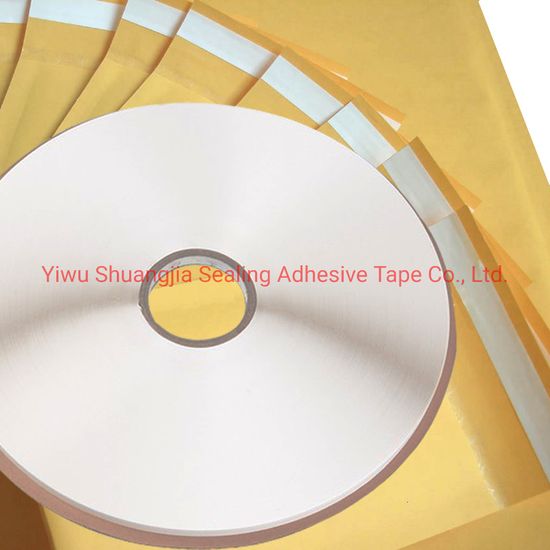
High Quality Envelope Permanent Sealing Tape

15mm White High Bond Permanent Sealing Tape for Courier Envelope

11mm Express Paper Envelope Bag Permanent Sealing Tape

I have found results from2000+products and700+suppliers aboutEnvelope sealing tape price


The price is primarily driven by material composition (BOPP, PET, or Paper), adhesive type (Hot Melt, Acrylic, or Solvent), and dimensions (width and total length per roll). High-performance tapes featuring antistatic liners or extended finger-lift edges for easy peeling typically command a premium. Additionally, the thickness of the adhesive layer (measured in microns) significantly impacts both bonding strength and cost.
Hot Melt adhesives are the most cost-effective for high-speed automated packaging due to their fast initial tack, whereas Acrylic adhesives offer better UV resistance and long-term aging stability, making them ideal for envelopes stored for extended periods. For heavy-duty or security-sensitive mailers, Solvent-based adhesives are preferred for their superior shear strength, though they come at a higher price point.
Buyers must ensure the tape meets REACH and RoHS standards to guarantee the absence of hazardous substances, especially for the EU market. For food-contact related mailers, FDA compliance may be necessary. Furthermore, if you are targeting eco-conscious markets, look for biodegradable certifications or FSC-certified paper liners, which may increase the unit price but add significant brand value.
To reduce TCO, focus on roll length optimization; longer rolls (e.g., 5000m to 10000m spools) reduce machine downtime for roll changes in factories. Evaluate the liner-to-adhesive ratio to ensure you aren't paying for excess waste. Sourcing from Made-in-China.com allows you to compare factory-direct wholesale prices, which can be 20-40% lower than local distributors when purchasing in bulk (MOQs of 500+ rolls).
The most significant risk is adhesive degradation during transit, especially when shipping through high-temperature tropical zones. Always request climate-controlled shipping or ensure the adhesive formula is stabilized for heat. Another risk is specification mismatch; ensure the inner core diameter matches your existing application machinery to avoid costly equipment incompatibility.
Start by requesting a Technical Data Sheet (TDS) and a Sample Pack for lab testing. Negotiate based on volume-tiered pricing—for instance, moving from a 20ft container to a 40ft container often yields a 5-10% discount. Use the Audit Reports available on Made-in-China.com to verify the supplier's production capacity and quality control systems before finalizing the contract.
Utilize Secured Payment services provided by the platform to ensure funds are only released upon proof of shipment. For large custom orders, implement a 30/70 payment structure (30% deposit, 70% upon presentation of the Bill of Lading). It is highly recommended to hire a third-party inspection service (like SGS or Intertek) to perform a Pre-Shipment Inspection (PSI) to verify quantity and adhesive tackiness.
Since tape is relatively heavy and dense, Sea Freight (FCL or LCL) is the most economical method. Ensure the packaging includes moisture-proof barriers and reinforced pallets to prevent crushing. Be aware of Anti-Dumping Duties that some countries may impose on specific plastic products; always check your local Harmonized System (HS) Code (typically under Chapter 3919) to calculate accurate landed costs.