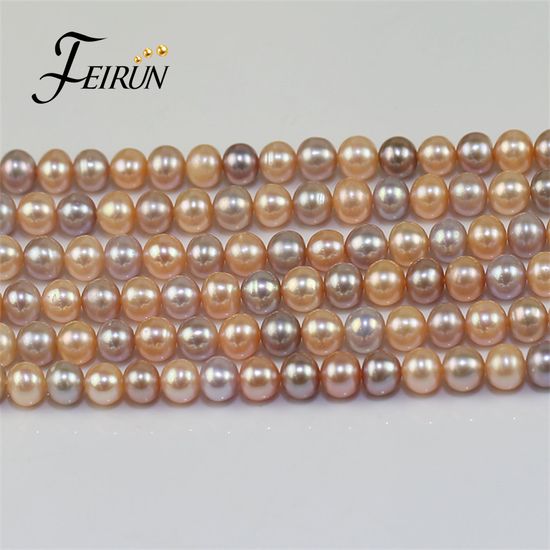
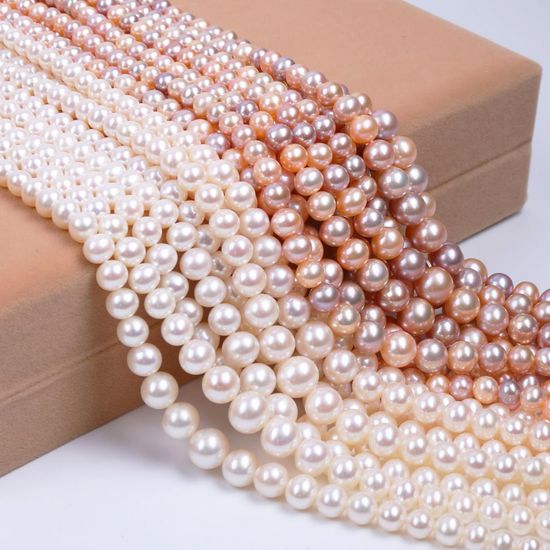
Genuine Semi-Finished Freshwater Pearl Strands for Jewelry Making Projects

Bulk Wholesale Necklace Natural Pink and Purple Freshwater Pearl Strands

Luxury Freshwater Baroque Pearl Millet Beads Paired with Black Spinel Necklace

I have found results from400+products and200+suppliers aboutFreshwater pearl strands


When evaluating quality, focus on the '5 S's': Shape (round, near-round, or baroque), Surface (cleanliness and presence of pits), Size (measured in mm), Shine (Luster), and Symmetry. High-quality strands should exhibit a sharp, mirror-like luster rather than a dull or chalky appearance. Ensure the nacre thickness is sufficient to prevent peeling, and check that the drilling is centered to ensure the strand hangs evenly.
Freshwater pearls naturally occur in white, cream, lavender, and pink shades. If you encounter vibrant colors like peacock green, deep black, or neon blue, they are likely dyed or irradiated. For professional B2B sourcing, request a GIA or NGTC (National Gemstone Testing Center) report to verify if the color is natural. Dyed pearls should be priced lower and must comply with REACH or RoHS standards to ensure no harmful chemicals (like lead or cadmium) were used in the dye process.
Your PO should clearly state the pearl grade (e.g., AAA, AA, A), the strand length (standard is usually 14-16 inches), and the pearl diameter range (e.g., 7-8mm). Specify the hole size (standard is 0.7mm-0.8mm) to ensure compatibility with your jewelry wire or silk thread. Additionally, define the matching quality—how well the pearls on a single strand match each other in terms of color and luster.
For the US market, ensure compliance with the FTC Jewelry Guides, which dictate how pearls must be disclosed (e.g., 'Cultured Freshwater Pearls'). For the EU, the most critical factor is the Nickel Release and Lead/Cadmium content in any metal clasps or tags attached to the strands, adhering to REACH regulations. Always ask for a Certificate of Origin to facilitate customs clearance and potential duty preferences.
Pearl grading is not universally standardized. To avoid quality discrepancies, request a 'Master Sample' before bulk production and use it as a benchmark for Third-Party Inspection (TPI). Platforms like Made-in-China.com offer Secured Trading services that hold payment until the quality is verified. Never rely solely on digital photos, as lighting can significantly enhance luster.
Freshwater pearl prices are highly sensitive to market auctions and harvest seasons. Negotiate based on volume tiers; for example, a 500-strand order should yield a 15-20% discount compared to a 50-strand order. If you are a startup, look for suppliers on Made-in-China.com that offer low MOQ (e.g., 10 strands) for 'in-stock' items to test the market before committing to large volumes.
Pearls are relatively soft (2.5-4.5 on the Mohs scale) and can be scratched. Ensure the supplier uses vacuum-sealed bags or soft pouches within rigid outer cartons. For international shipping, use express couriers (FedEx/DHL/UPS) with full-value insurance coverage. Ensure the Commercial Invoice accurately reflects the 'Cultured Pearl' status to avoid unnecessary customs delays or seizures.
Always verify the supplier's Business License and Audited Supplier report on Made-in-China.com. Use Escrow-based payment methods where possible. Avoid direct wire transfers to personal bank accounts. For large orders, consider a pre-shipment inspection by agencies like SGS or Intertek to confirm the quantity and quality match the packing list.