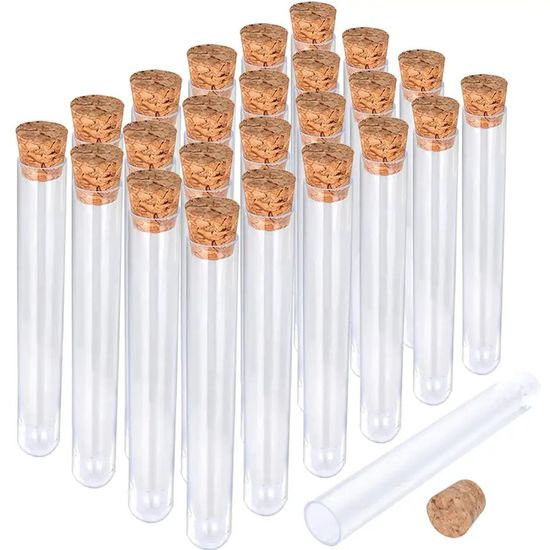
Neutral Borosilicate Glass Tube Witk Cork for Sale

Hot Sale Clear Flat Bottom Glass Test Tube with Soft Cork

Flat Bottom Glass Test Tube with Cork

I have found results from30000+products and10000+suppliers aboutGlass tube with cork


Buyers should prioritize Borosilicate 3.3 glass over soda-lime glass if the application involves heat or chemicals, as it offers superior thermal shock resistance and chemical stability. Ensure the wall thickness is uniform, typically ranging from 0.8mm to 1.5mm, to prevent breakage during transit or usage. For the cork, look for Grade A natural cork or high-density agglomerated cork to ensure a hermetic seal and prevent crumbling.
For food, beverage, or cosmetic storage, the glass must be BPA-free and lead-free. Verify that the supplier complies with FDA (US) or LFGB (EU) food-grade certifications. If used in a laboratory setting, ensure the tubes meet ISO 4796 standards for laboratory glassware. Always request a Certificate of Analysis (COA) for the raw materials used in both the glass and the cork stoppers.
Suppliers on Made-in-China.com usually offer extensive customization, including silk-screen printing, heat transfer labels, and frosted finishes. Beyond aesthetics, you can specify flat bottoms for display or round bottoms for traditional lab use. Custom cork options include tapered shapes for a tighter fit or cork tops with wooden/plastic heads for easier handling in premium packaging scenarios.
These versatile containers are widely used in wedding favors and gift packaging (for tea, spices, or candies), cosmetic sampling (bath salts, oils), and botanical displays. They are also essential in laboratory environments for non-volatile chemical storage and in the home decor market for minimalist propagation stations or spice racks.
Glass is a high-risk category for damage. Insist on 5-layer corrugated export cartons and individual egg-crate dividers or bubble wrap for each tube. Request that the supplier uses palletized shipping for bulk orders to minimize manual handling. It is highly recommended to include a 1-2% breakage allowance in the contract or negotiate for the supplier to provide extra units free of charge to cover potential transit damage.
Look for 'Audited Suppliers' who have undergone on-site inspections by third-party institutions like SGS, Bureau Veritas, or TÜV Rheinland. Check their 'Full Audit Report' to verify their production capacity and quality control processes. Prioritize suppliers with at least 3-5 years of export experience to ensure they understand international packaging and documentation requirements.
Start by requesting a tiered pricing structure (e.g., 5,000, 10,000, and 50,000 units). Since glass production is energy-intensive, prices may fluctuate with raw material and fuel costs. Aim for a long-term supply agreement to lock in prices. Don't just negotiate the unit price; negotiate the MOQ (Minimum Order Quantity) and ask for free samples (excluding shipping) to validate quality before committing to a full container load.
Always use Secured Trading Services offered by the platform to protect your funds until delivery is confirmed. For large orders, a standard 30% deposit and 70% balance against the Bill of Lading (B/L) is common. Avoid using untraceable payment methods. Ensure all specifications, including glass clarity, dimensions (±0.5mm tolerance), and cork fit, are clearly documented in the Proforma Invoice (PI) to provide leverage in case of a dispute.