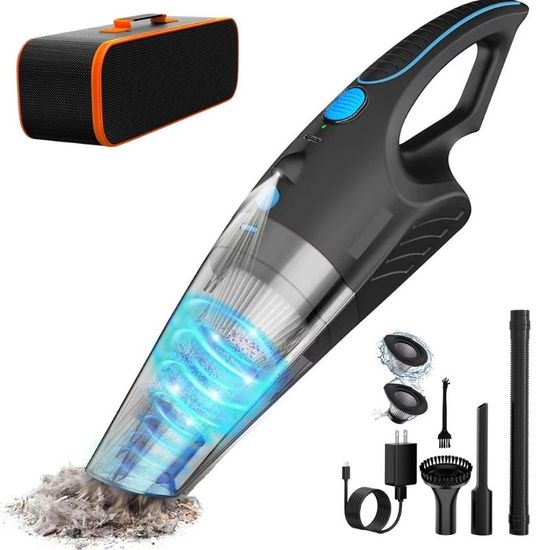
Vacuum Cleaner with Powerful Suction for Cleaning Pet Hair

Best Pet Hair Vacuum Cleaner for Stairs and Rugs

Pet Hair and Hardwood Floor Cleaning, Fast Charging, Quiet Operation New Arrival Smart Cordless Bagless Stick Electric Vacuum Cleaner

I have found results from1000+products and900+suppliers aboutHair vacuum cleaner


When evaluating hair vacuum cleaners, prioritize suction power (measured in Pascals or Air Watts) to ensure it can handle heavy hair clumps without clogging. Look for HEPA filtration systems which are essential for capturing fine dander and allergens. For salon environments, a stationary 'touchless' infrared sensor is a key technology, allowing hair to be swept toward the base and automatically suctioned. Additionally, verify the noise level (dB); professional models should ideally operate below 70dB to maintain a comfortable environment for clients.
As an electrical appliance, the product must meet regional safety standards. For the US market, UL or ETL certification is critical, while the EU market requires CE marking and RoHS compliance to ensure the absence of hazardous substances. If the unit includes a battery (cordless models), it must have UN38.3 and MSDS reports for safe transport. Always request EMC (Electromagnetic Compatibility) testing reports to ensure the vacuum doesn't interfere with other salon equipment.
Focus on the motor type; brushless motors generally offer a longer lifespan (up to 5,000 hours) compared to brushed motors. Check the bin capacity—a minimum of 2-3 liters is recommended for high-traffic salons to reduce emptying frequency. Ensure the filters are washable and easily accessible, as clogged filters are the primary cause of motor burnout. Ask the supplier for component stress test data, specifically regarding the infrared sensor's trigger reliability over 10,000+ cycles.
The primary risk is voltage and plug incompatibility. Ensure the supplier provides the correct local voltage (e.g., 110V for North America, 220V for Europe/Asia) and the appropriate plug type (Type A, C, G, etc.). Another risk is shipping damage to the internal motor; insist on double-walled corrugated packaging and drop-test validation (ISTA 1A standard) before dispatch.
Start by requesting a sample unit to verify the suction-to-noise ratio. When discussing bulk orders, negotiate based on tiered pricing—typically, a 15-20% discount is achievable when moving from a sample to a 20ft container load. Ask for 1-2% free spare parts (such as extra filters or sensors) to be included in the shipment, which is a standard industry practice to offset potential DOA (Dead on Arrival) units.
Always use secure payment methods and consider using inspection services provided by third parties or through the Made-in-China.com ecosystem to verify the goods before the final balance is paid. Ensure the Proforma Invoice (PI) clearly states the warranty period (minimum 12 months) and the specific after-sales resolution process for defective units.
Since hair vacuums are relatively bulky but not extremely heavy, sea freight (LCL or FCL) is the most cost-effective method for bulk orders. If the vacuum contains a lithium battery, it must be declared as Dangerous Goods (DG), which increases shipping costs and requires specific labeling. For faster replenishment, air freight is viable but ensure the volumetric weight is calculated to avoid unexpected surcharges.