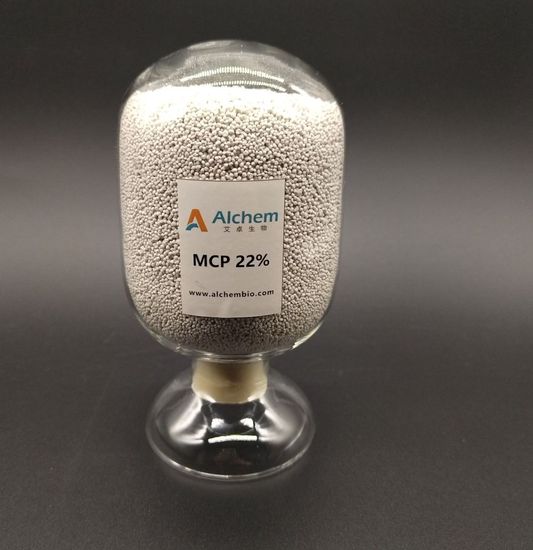
Feed Grade Mcp 22.3% Monocalcium Phosphate in Powder

Feed Grade Monocalcium Phosphate (MCP 23%) CAS No. 7758-23-8

Fish Feed Ingredients Monocalcium Phosphate Mcp 22%/23% High Quality

I have found results from400+products and200+suppliers aboutMcp monocalcium phosphate feed food


Buyers must distinguish between Feed Grade and Food Grade MCP. Feed Grade is primarily used as a phosphorus and calcium supplement for livestock and aquatic animals, focusing on high biological phosphorus absorption. Food Grade MCP acts as a leavening agent or acidulant in the food industry and must meet much stricter purity standards, specifically regarding heavy metal limits like Arsenic (<3mg/kg) and Lead (<2/mg/kg).
The most critical indicators are Total Phosphorus (P) content (typically ≥22%) and Water-Soluble Phosphorus (typically ≥17%). High water solubility is essential for animal digestion. Additionally, the Fluorine (F) content must be strictly controlled, usually below 0.18% for feed grade, to prevent toxicity in livestock. For physical properties, ensure the particle size (granularity) is uniform (e.g., 0.2-1.2mm) to prevent dust and ensure even mixing in premixes.
For the feed industry, suppliers should hold FAMI-QS or ISO 22000 certifications to ensure feed safety. For food-grade applications, HACCP, HALAL, and KOSHER certifications are often required by global buyers. Always request a Certificate of Analysis (COA) for every batch and verify that the product complies with the FCC (Food Chemicals Codex) or local regulations like the EU Feed Hygiene Regulation.
MCP produced via the thermal phosphoric acid method generally results in higher purity and lower impurity levels compared to the wet-process method. However, the wet-process is more cost-effective. Buyers should evaluate the neutralization stability and the residual moisture content (typically <3%) to prevent caking during long-term storage and maritime transport.
The primary risk is quality inconsistency, where the delivered batch does not match the pre-shipment sample. To mitigate this, use third-party inspection services (like SGS or BV) to test phosphorus levels and heavy metals before loading. Another risk is moisture absorption (caking); ensure the supplier uses double-layered UV-resistant PE/PP bags and provides adequate container desiccant.
Leverage volume-based pricing; discounts of 5-10% are common for full container loads (FCL). Since MCP is a commodity influenced by raw material costs (phosphate rock and sulfuric acid), consider long-term framework contracts to lock in prices during market volatility. Always negotiate Incoterms clearly, preferring FOB or CIF to manage logistics risks effectively.
MCP is a chemical product; ensure the supplier provides a Material Safety Data Sheet (MSDS) for customs clearance. For transaction security, utilize secure payment methods such as Letter of Credit (L/C) or trade assurance services provided by reputable platforms like Made-in-China.com to protect your funds until the goods are verified.