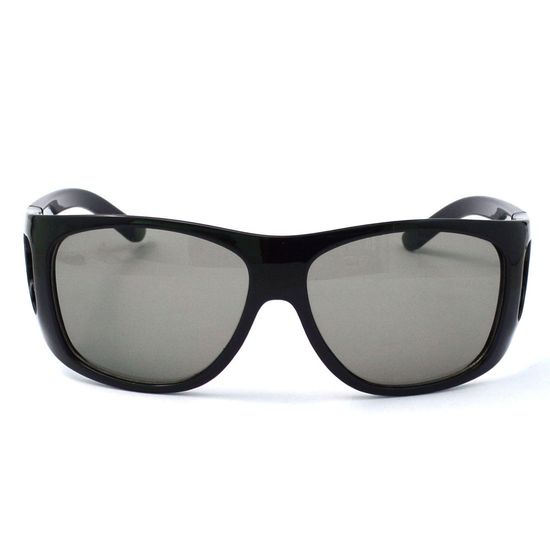
Prescription Safety Glasses for Eye Protection

Over-Prescription Safety Glasses with Full Eye Coverage Design

Safety Glasses Over Prescription Glasses for Comprehensive Eye Protection

I have found results from1000+products and400+suppliers aboutPrescription safety glasses


When sourcing prescription safety glasses, the most critical factor is compliance with international impact resistance standards. For the US market, ensure products meet ANSI Z87.1-2020 (High Impact); for the European market, look for EN 166 certification. The lenses must be marked with the manufacturer's logo and the specific standard code. Additionally, verify that the supplier holds an ISO 13485 certification, which is the quality management standard for medical devices, ensuring the optical accuracy of the prescription lenses.
Polycarbonate is the industry standard for safety glasses due to its high impact resistance and lightweight properties. However, for high-diopter prescriptions, Trivex is a superior choice as it offers better optical clarity (higher Abbe value) and is even lighter than polycarbonate, though it comes at a higher cost. Avoid standard CR-39 or glass lenses unless they are specifically treated and meet high-velocity impact tests, as they are prone to shattering.
The frame must provide lateral protection, either through integrated side shields or a wrap-around design. For high-dust environments, look for frames with foam gaskets to seal the eye area. Ensure the material is non-conductive (dielectric) if the end-users work near electrical hazards. Furthermore, the bridge should have adjustable non-slip nose pads and temple arms to ensure the glasses remain secure during physical labor.
To maximize worker productivity and safety, specify permanent anti-fog coatings, especially for environments with temperature fluctuations. Anti-scratch (hard coat) is essential to extend the product lifecycle in abrasive industrial settings. For outdoor workers, UV400 protection and anti-reflective (AR) coatings are recommended to reduce eye strain and glare.
Prescription errors are a major risk in cross-border sourcing. You should require the supplier to provide a final lensometry report for every pair before shipping. It is highly recommended to use a standardized digital template for transmitting Pupillary Distance (PD) and Rx values to avoid manual entry errors. For large orders, request a pilot batch of 5-10 units to verify optical centering and power accuracy.
Prescription safety glasses are often classified as Class I Medical Devices. Ensure your supplier provides a Declaration of Conformity and is registered with the relevant local authority (e.g., FDA registration for the US). Use protective, individual hard-shell cases within the bulk shipping cartons to prevent frame distortion or lens scratching during long-transit maritime or air freight.
Negotiate a quality warranty period of at least 12 months covering frame breakage and coating peeling. Given the customized nature of prescription lenses, standard returns are difficult; therefore, insist on a 'Remake Policy' where the supplier replaces units at no cost if the optical deviation exceeds ISO 8980 tolerances. Always use Trade Assurance services to secure your payment until the goods pass a third-party inspection.
Production for prescription safety glasses typically takes 15-25 days, significantly longer than non-prescription versions. To optimize your supply chain, choose suppliers who have in-house optical labs rather than those who outsource lens surfacing. This reduces lead times by 30% and allows for better quality control over the lens-to-frame glazing process.