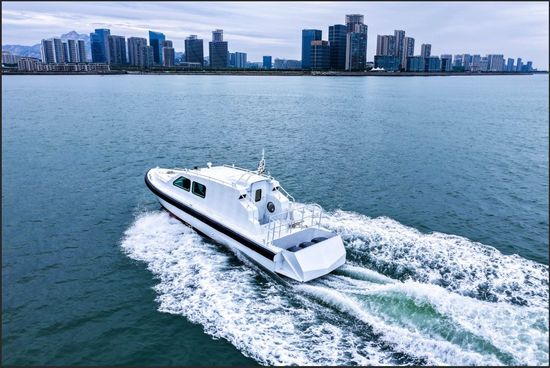
Advanced Unmanned Patrol Boat for Enhanced Security Solutions

15-Meter Aluminum High-Speed Patrol Boat for Reliable Security

Lb-1980 High-Speed Patrol Boat for Coastal Security Operations

I have found results from6000+products and1000+suppliers aboutPrices of security boats


The price of security boats is primarily driven by hull material and propulsion systems. For high-speed interception, Marine Grade Aluminum 5083 is preferred for its strength-to-weight ratio, while GRP (Glass Reinforced Plastic) offers cost-effective durability for coastal patrols. You must verify the engine horsepower (HP) and type (Outboard vs. Inboard Diesel), as these account for a significant portion of the total cost. Additionally, ensure the boat includes ballistic protection levels (e.g., NIJ Level III or IV) if the vessel is intended for high-risk security zones.
Compliance is non-negotiable for maritime safety. Ensure the supplier adheres to ISO 12217 for stability and buoyancy and CE Marking (Category B or C) for European market access. For professional security use, look for vessels built to IACS (International Association of Classification Societies) member standards, such as Lloyd's Register or ABS. Meeting these standards may increase the initial purchase price but significantly reduces insurance premiums and ensures long-term operational safety.
A professional security boat requires integrated electronics. Prices vary based on the inclusion of FLIR (Forward Looking Infrared) thermal cameras, AIS (Automatic Identification System), and high-resolution radar systems for night operations. When sourcing from Made-in-China.com, check if the supplier offers OEM integration for specialized communication gear like encrypted VHF radios or satellite links, which are essential for coordinating security responses.
Buyers should demand proof of maximum speed (typically 35-50 knots) under full load and fuel consumption rates at cruising speed to calculate operational costs. Request sea trial reports that detail the boat's turning radius and stability in Sea State 3 or 4. A high-quality security boat should also feature reinforced fendering systems to allow for safe boarding operations without damaging the hull.
The most significant risks include damage during transit and regulatory seizure. Because boats are oversized cargo, they require specialized cradle systems and Breakbulk or Flat Rack shipping. Ensure the contract specifies Marine Cargo Insurance covering 'All Risks.' Furthermore, verify dual-use goods regulations; some high-speed security boats may require export licenses from the country of origin due to their potential military application.
Focus on the Total Cost of Ownership (TCO) rather than just the sticker price. Negotiate for spare parts packages (e.g., extra propellers, filters, and pumps) to be included in the bulk price. For orders of multiple units, request a staggered payment schedule linked to production milestones: 30% deposit, 40% after hull completion, and 30% after successful sea trials and third-party inspection.
For large security vessels, Ro-Ro (Roll-on/Roll-off) shipping is the safest and most efficient method if the boat is on a trailer. If a trailer is not used, Flat Rack containers are common for boats under 40 feet. Always confirm the Incoterms; CIF (Cost, Insurance, and Freight) is often preferred for first-time buyers to ensure the supplier handles the complex logistics of maritime transport, but FOB (Free On Board) allows for better control over shipping costs if you have a reliable freight forwarder.
Use secure payment methods and platforms. When sourcing via Made-in-China.com, leverage their audit supplier reports to verify the factory's existence and production capacity. Always hire a third-party surveyor (like SGS or Intertek) to conduct a Pre-Shipment Inspection (PSI) to verify that the technical specifications and hull integrity match the agreed-upon contract before the final balance is paid.