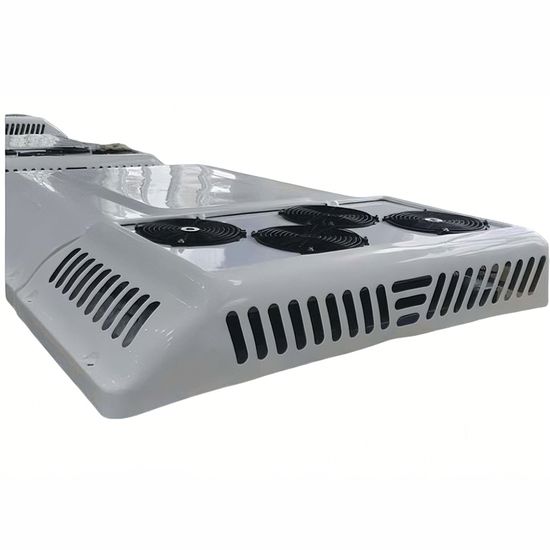
Railway coach air conditioning manufacturers
I have found results from3000+products and900+suppliers aboutRailway coach air conditioning
Air Conditioning for Railway Metro and Tram
US$32,000.00-35,000.00
1 Piece(MOQ)
Variable Frequency Air Conditioning for Railway Vehicles
US$32,000.00-35,000.00
1 Piece(MOQ)
Heat Pump Variable Frequency Air Conditioning for Railway Train
US$32,000.00-35,000.00
1 Piece(MOQ)
Variable Frequency Air Conditioning for Rail Transit Vehicles
US$32,000.00-35,000.00
1 Piece(MOQ)
Rail Transit Variable Frequency Air Conditioning for Heating and Cooling
US$32,000.00-35,000.00
1 Piece(MOQ)
Sourcing guidance for Railway Coach Air Conditioning
What are the core technical specifications required for railway-grade air conditioning units?
Railway HVAC systems must be engineered for extreme durability. Key specifications include vibration resistance (IEC 61373 standard) to withstand constant rail movement, wide voltage input ranges (e.g., 110V DC, 220V AC, or 380V AC) to match locomotive power, and high-protection ratings (IP65 or higher) for external units. Additionally, ensure the cooling capacity is calculated based on passenger density and ambient temperature extremes of the target region.
Which international compliance standards are mandatory for railway HVAC systems?
Safety is paramount in rail transport. Products must comply with EN 45545-2 (Fire Protection on Railway Vehicles), which regulates the smoke and toxicity levels of materials. For electrical safety and performance, look for EN 50155 (Electronic Equipment Used on Rolling Stock) and ISO 9001/TS 22163 (IRIS - International Railway Industry Standard) certifications to ensure the supplier meets global rail industry benchmarks.
How does the usage scenario affect the design of the air conditioning unit?
Design varies significantly between High-Speed Rail (HSR), Metro/Subway, and Conventional Passenger Coaches. HSR units require pressure protection valves to prevent ear discomfort during tunnel entries. Metro units prioritize rapid air exchange and high-efficiency filtration due to frequent door openings and high passenger density. Always specify if the unit is roof-mounted or under-floor mounted based on the coach's structural design.
What key technologies should be prioritized for energy efficiency and passenger comfort?
Prioritize Inverter Technology (VFD), which allows the compressor to adjust speed based on demand, reducing energy consumption by up to 30%. For comfort, look for microprocessor-based control systems with PID algorithms to maintain a temperature fluctuation within ±0.5°C and low-noise centrifugal fans to ensure a quiet cabin environment.
Cross-Border Procurement Strategy for Railway HVAC Systems
What are the primary risks when sourcing railway equipment internationally?
The biggest risks are technical non-compliance and logistical damage. Because railway standards vary by country (e.g., track gauge, power supply), a mismatch can lead to unusable stock. Third-party pre-shipment inspections are mandatory to verify that the units meet the specific technical drawings and safety certifications agreed upon in the contract.
How should I negotiate with suppliers on Made-in-China.com for large-scale rail projects?
Focus on Life Cycle Cost (LCC) rather than just the initial purchase price. Negotiate for extended warranties (typically 3-5 years) and the inclusion of critical spare parts kits (filters, sensors, contactors). Request customization flexibility for software interfaces to ensure the HVAC system can communicate with the train's existing TCMS (Train Control and Management System) via MVB or Ethernet.
What are the best practices for shipping and transaction security for heavy industrial equipment?
Use Escrow services or Letters of Credit (L/C) to secure large payments, releasing funds only upon verification of shipping documents and inspection reports. For shipping, railway HVAC units are heavy and sensitive; require seaworthy packaging with shock-absorption bases and moisture-proof vacuum sealing. Ensure the Incoterms are clearly defined, preferably CIF or DAP, to include insurance for high-value cargo.
How can I ensure long-term maintenance and after-sales support across borders?
Verify if the supplier provides comprehensive technical documentation (O&M manuals, wiring diagrams) in your local language. Ask for remote diagnostic support capabilities and confirm the availability of local service partners or the supplier's ability to send engineers for commissioning and FAT (Factory Acceptance Testing).