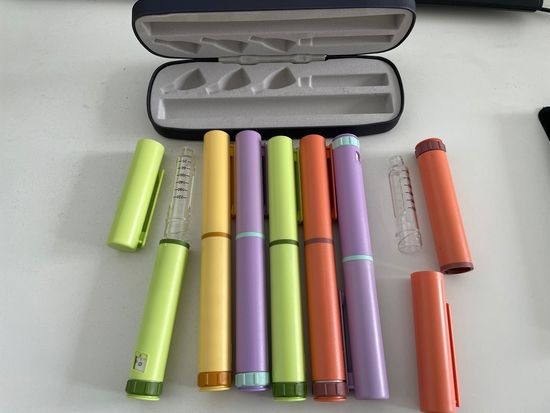
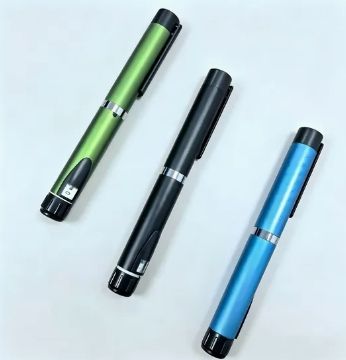
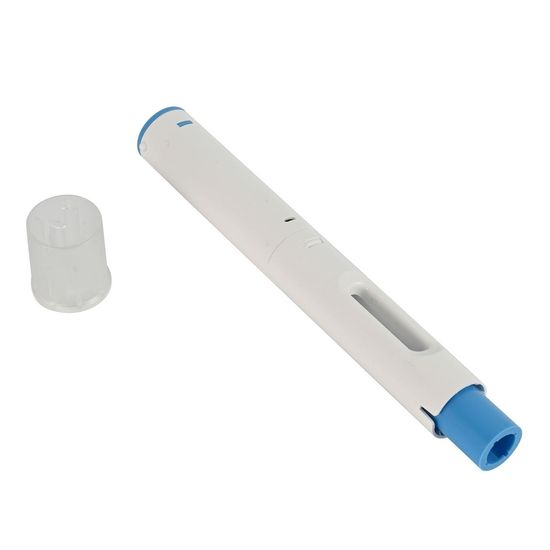
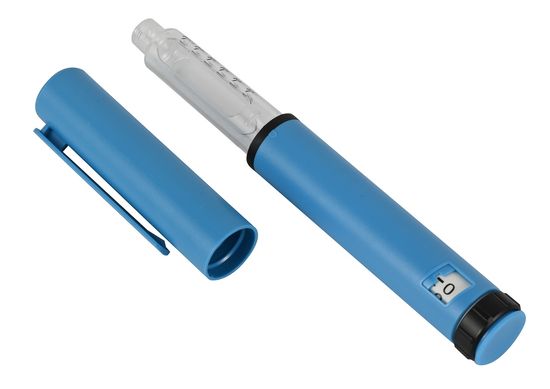
Personal Healthcare Reusable Insulin Pen Auto Injector Pen

3ml Reusable Insulin Injection Pen for 60u and 80u

3ml Cartridge Pen Injector with Reusable Pen 60iu

CE/FDA Reusable Pen Injector 80u with Metal Box for Injection Pen

I have found results from400+products and200+suppliers aboutReusable insulin pen price


The price of a reusable insulin pen is primarily driven by its dosing precision, material durability, and mechanical complexity. High-quality pens should offer dose increments as small as 0.5 or 1 unit with a high degree of accuracy (ISO 11608-1 compliance). Look for anodized aluminum or high-grade medical plastics which justify a higher price point due to their 3-to-5-year lifespan. Additionally, features like low-force injection mechanisms and audible dose clicking are premium attributes that enhance user experience and safety.
In the medical device industry, compliance is non-negotiable and directly affects the unit price. You must ensure the supplier holds ISO 13485 certification for medical device quality management. Products must meet CE Marking (MDR 2017/745) for the European market or FDA 510(k) clearance for the U.S. market. Sourcing a 'cheap' non-certified pen carries immense legal and health risks; therefore, the price should reflect the cost of rigorous clinical testing and regulatory documentation.
While the initial procurement cost of a reusable insulin pen is significantly higher than a disposable one, the long-term Total Cost of Ownership (TCO) is much lower. Reusable pens only require the purchase of 3ml insulin cartridges and replacement needles, reducing waste and long-term expenses. For distributors, marketing the environmental sustainability and long-term cost savings of reusable models allows for higher profit margins compared to high-volume, low-margin disposables.
Yes, cartridge compatibility is a critical factor. Most reusable pens are designed for specific 3ml insulin cartridges (e.g., 300 units). You must verify if the pen is 'open system' or 'closed system' (proprietary to certain insulin brands). For broad market appeal, sourcing pens that are compatible with major insulin brands like Eli Lilly, Novo Nordisk, or Sanofi is essential. Failure to match the thread type and plunger depth will render the product unusable.
To ensure transaction security, always use secure payment terms such as Letters of Credit (L/C) or escrow services provided by reputable platforms like Made-in-China.com. Conduct a third-party factory audit to verify the supplier's production capacity and cleanroom standards (Class 100,000). Never transfer full payment upfront; a 30% deposit and 70% balance against the Bill of Lading (B/L) after a successful pre-shipment inspection is the industry standard.
Focus your negotiation on tiered pricing and warranty terms rather than just the lowest unit price. Request a graduated discount scale (e.g., 5-10% off for orders over 5,000 units). More importantly, negotiate for a defective exchange rate (e.g., 1-2% spare units) included in the shipment, as medical devices require 100% reliability. Ask the supplier to provide customized branding (OEM) at no extra cost for high-volume commitments to increase your brand equity.
Insulin pens are classified under HS Code 901831 (Syringes, with or without needles). Ensure the supplier provides a detailed Packing List, Commercial Invoice, and Certificate of Origin. Because these are medical devices, customs may require a Declaration of Conformity. For shipping to specific countries, choose air freight for initial samples to test the market quickly, but utilize sea freight (FCL/LCL) for bulk orders to maintain a competitive landed cost.