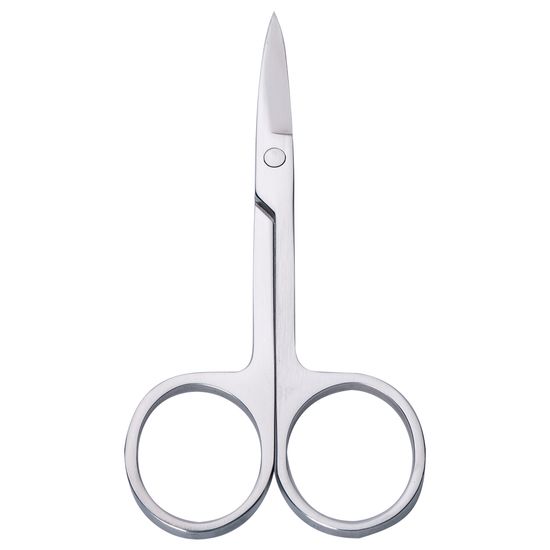
Foska Stainless Steel Multipurpose 8" Office School Home Scissors

Foska 5'' Stainless Steel Blades Plastic Safety Comfort Grip Small Scissors

Hot-Selling Stainless Steel Office/School Student Kids Paper Cutting Stationery Household Scissors

I have found results from4000+products and1000+suppliers aboutStainless steel scissor


For professional and industrial use, prioritize 420 or 440C high-carbon stainless steel as they offer superior hardness (HRC 52-60) and edge retention. For general office or household use, 304 or 200 series stainless steel is common due to its excellent corrosion resistance and lower cost. Always verify the Rockwell Hardness (HRC) rating to ensure the blades won't dull quickly under repetitive use.
The pivot is the most critical failure point. Ensure the supplier uses adjustable screw pivots rather than permanent rivets for high-end models, as this allows for tension calibration and easier sharpening. The movement should be smooth without lateral play, and the blades should have a slight inward curve (set) to ensure a clean cut from the pivot to the tip.
If the scissors are for medical use, they must meet ISO 13485 and have CE or FDA registration. For kitchen or food-contact scissors, compliance with LFGB (Germany) or FDA (USA) food safety standards is mandatory. For general consumer goods, ensure the handles are REACH or RoHS compliant, meaning they are free from harmful phthalates and heavy metals in the plastic or rubber grips.
To reduce user fatigue in industrial settings, look for asymmetric handle designs with soft-grip TPR (Thermoplastic Rubber) inserts. For heavy-duty cutting, a large finger loop that accommodates multiple fingers is essential. Additionally, check if the supplier offers ambidextrous designs to increase the product's market versatility.
Request a Pre-Shipment Inspection (PSI) by a third-party agency to verify the cutting performance (e.g., the 10-layer cloth test) and salt spray test results (to ensure rust resistance). Utilize Made-in-China.com's Secured Trading services to ensure payment is only released once the goods pass quality verification.
Focus on tiered pricing based on packaging types (e.g., bulk pack vs. blister card). You can often negotiate a lower MOQ for trial orders if you accept the supplier's standard branding. For customized OEM orders, aim for a 30% deposit and 70% balance payment against the Bill of Lading (B/L) to maintain cash flow leverage.
Ensure the packaging includes reinforced tip protectors or plastic sheaths to prevent piercing the outer cartons during transit. For sea freight, request desiccant silica gel packs inside the inner boxes to prevent oxidation or 'white rust' caused by high humidity in shipping containers.
Be aware of Anti-Dumping Duties (ADD) that some regions (like the EU or USA) may impose on specific Chinese steel products. Check the HS Code (typically 8213.00) against your local tariff schedule. Working with a supplier on Made-in-China.com who provides a formal Certificate of Origin (CO) can help you qualify for preferential tariff rates under RCEP or other trade agreements.