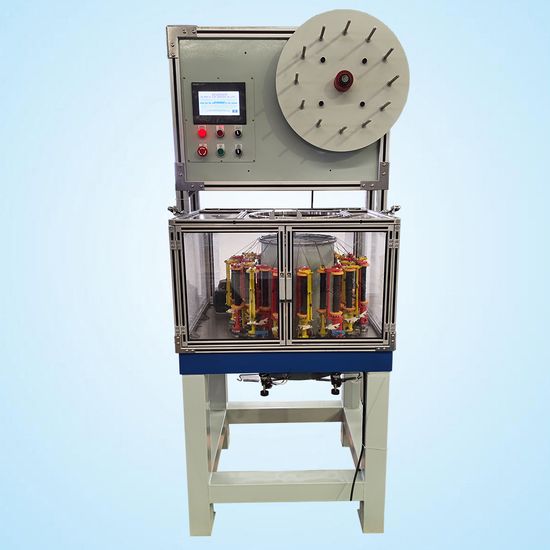
Competitive Price Widely Used Vertical Braiding Machine

16 Spindle Wire Vertical Braiding Machine
Fiberglass Silicone Sleeving Protective Fireproof Sleeve Braiding Machine

I have found results from400+products and200+suppliers aboutUsed braiding machines factory


When sourcing from a factory, you must verify the number of carriers (e.g., 16, 24, 32, or 48 spindles) and the horn gear diameter, as these determine the braid density and material compatibility. Check the motor condition and inverter brand (e.g., Delta or Siemens) to ensure stable speed control. It is vital to inspect the wear level of the track plate and bobbin spindles, as excessive friction in used units can lead to frequent yarn breakage and uneven tension.
Ensure the factory provides machines that comply with CE marking (Europe) or OSHA standards (USA) regarding mechanical guarding. Even for used equipment, the emergency stop systems and protective covers must be fully functional. Request a refurbishment report that details the replacement of critical safety components and electrical wiring to prevent fire hazards or workplace injuries.
Used braiding machines are highly versatile, suitable for producing textile ropes, electrical wire shielding, medical catheters, and high-pressure hoses. You must confirm if the machine is configured for horizontal or vertical braiding. Ensure the tension control system is compatible with your specific raw materials, whether they are synthetic fibers (nylon, polyester), metallic wires (copper, stainless steel), or high-performance yarns like Kevlar.
A used machine typically costs 40% to 60% less than a new one, but you must calculate the Total Cost of Ownership (TCO). Factor in the cost of consumable parts (bobbins, springs, and ceramic eyes) and potential downtime. If the factory offers a warranty of at least 6-12 months on core components like the gearbox, the economic feasibility increases significantly for high-volume production startups.
The biggest risk is 'As-Is' quality discrepancies, where the machine's actual condition differs from the video demonstration. To mitigate this, always use Made-in-China.com's secured payment services and request a Pre-Shipment Inspection (PSI) by a third-party agency like SGS or Intertek. Ensure the inspector verifies the serial numbers to prevent the supplier from swapping the unit before loading.
Focus your negotiation on spare parts packages and technical support rather than just the unit price. Demand a wear-parts kit (extra carriers, springs, and gears) included in the price. For orders exceeding 5 units, negotiate for remote video installation guidance or a discount on the export wooden crate packaging to ensure the machines are protected against sea-salt corrosion during transit.
Used machinery often requires a Cleanliness Certificate to prove it is free of oil leaks and soil to pass quarantine in countries like Australia or the USA. Ensure the factory uses vacuum packaging and anti-rust oil for sea freight. Correct HS Code classification (typically 8447) is essential to avoid customs delays and ensure you benefit from any applicable trade agreement duty preferences.
Check if the supplier is a Gold Member or Audited Supplier on Made-in-China.com. Look for factories that have a dedicated testing floor where they can run the machines under load for 24 hours before shipping. Request past export Bill of Lading (B/L) records to confirm they have experience shipping heavy industrial equipment to your specific region.