
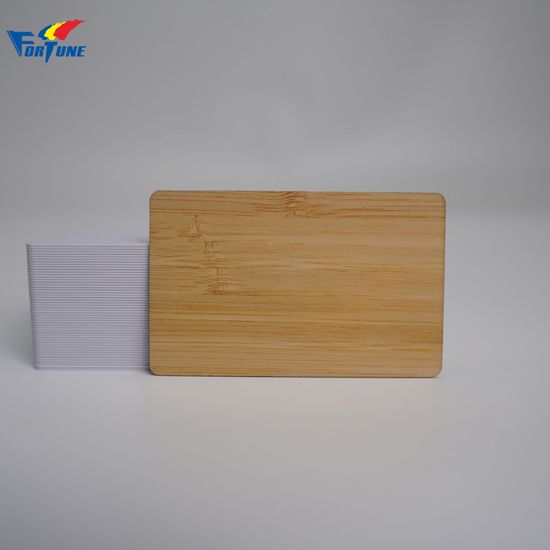
Custom Bamboo Business Cards From China Factory - Eco-Friendly Design

Premium Customizable Wooden Business Membership Cards for Professionals

Elegant High-Quality Wooden Gift Cards for VIP Clients

I have found results from900+products and400+suppliers aboutWood business cards


Buyers should prioritize sustainable wood species such as Bamboo, Basswood, Cherry, Walnut, or Maple. The standard thickness for a durable yet flexible card is typically 0.5mm to 0.8mm. It is crucial to ensure the wood is kiln-dried to prevent warping or cracking during transit and storage. For premium applications, look for multi-layer cross-grain lamination, which significantly increases structural integrity compared to single-ply veneers.
For a high-end tactile feel, Laser Engraving (Etching) is the industry standard, providing a permanent, recessed effect. If your brand requires specific colors, UV Digital Printing is recommended as it offers high color accuracy and adheres well to porous wood surfaces. For a luxury finish, consider Silk Screen Printing for metallic inks or Hollow-out (Die-cutting) for intricate geometric patterns that utilize the natural transparency of the wood.
As a wood-based product, compliance with the FSC (Forest Stewardship Council) certification is vital to ensure the timber is sourced from responsibly managed forests. For entry into the US market, ensure the adhesives used meet CARB Phase 2 or EPA TSCA Title VI standards regarding formaldehyde emissions. For EU markets, products must comply with REACH regulations concerning chemical treatments and dyes.
Request samples to perform a flexibility test; a high-quality card should bend slightly without snapping. Check for edge smoothness—low-quality laser cutting can leave charred, soot-covered edges that soil fingers. Verify the grain consistency across a batch, as natural variations are expected, but extreme knots or discolorations can affect the legibility of the printed text.
Wood products are often subject to Phytosanitary Inspections. While thin veneers (like business cards) are usually exempt from ISPM 15 heat treatment requirements, some customs authorities may still require a Fumigation Certificate or a Declaration of Non-Solid Wood Packaging Material. Always confirm the specific Harmonized System (HS) code—typically 4421.99—with your supplier to avoid misclassification and delays.
Start by requesting a tiered pricing structure; for wood cards, the price per unit drops significantly when moving from 500 to 5,000 units due to machine setup costs. Negotiate for free digital mock-ups and a pre-production physical sample (often $30-$50) to be credited back to the bulk order. Ensure the contract specifies a defect rate of less than 1%, as natural wood grain can occasionally interfere with laser precision.
Always use Secured Payment services provided by Made-in-China.com to ensure your funds are held in escrow until you confirm receipt of the goods. Avoid direct wire transfers to private accounts. For large enterprise orders, consider using a Letter of Credit (L/C) or a 30% deposit / 70% balance against Bill of Lading (B/L) arrangement to mitigate financial risk.
Since wood business cards are lightweight but sensitive to humidity, Air Freight or Express Couriers (DHL/FedEx/UPS) are preferred for orders under 50kg to ensure a fast, climate-controlled environment. For larger sea freight orders, ensure the supplier uses desiccant silica gel packs and moisture-proof inner packaging (such as vacuum-sealed polybags) to prevent mold growth during long transit times across different climate zones.