
Satisfies 1 requirement
Basketball Court Volleyball Court Sports Arena Indoor and Outdoor Rubber Material PP Floor
US$5.00-6.00
1 Square Meter(MOQ)

10000+ products and 6000+ suppliers results


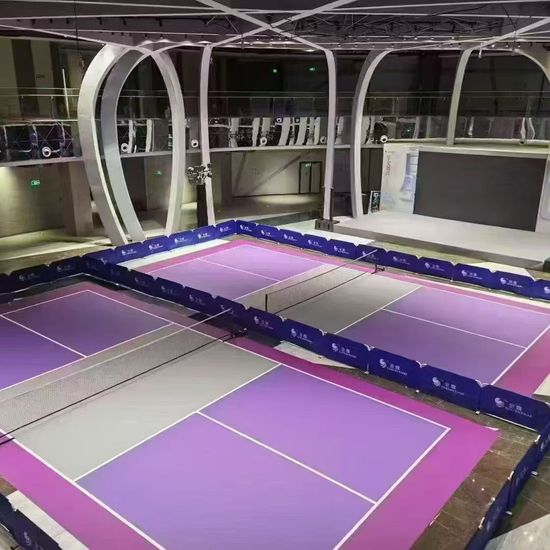


Selecting the appropriate material is the most critical factor affecting both performance and price. For professional indoor courts, PVC sports flooring with a thickness of 7.0mm to 9.0mm is the standard, offering excellent shock absorption (≥35%) and vertical deformation control. For outdoor multi-purpose courts, PP Interlocking Tiles are the most cost-effective and durable choice due to their weather resistance and self-draining design. If you are sourcing for high-end international competitions, ensure the material is FIVB (International Volleyball Federation) compliant.
Price variations are primarily driven by the wear layer thickness, density of the foam buffer, and surface treatment. A high-quality PVC floor should have a wear layer of at least 1.2mm to 1.5mm to ensure a lifespan of 8-10 years. Additionally, look for UV cross-linked surface treatments which reduce maintenance costs and prevent 'skin burn' during dives. For interlocking tiles, the weight per tile and the locking system strength are key indicators of structural integrity and price justification.
To ensure transaction security and product safety, buyers must verify EN 14904 standards (the European standard for sports surfaces). Key certifications include ISO 9001 for manufacturing quality, ISO 14001 for environmental management, and CE marking. For indoor air quality, ensure the flooring is VOC-free and meets phthalate-free requirements, especially for school or community center projects.
Don't just look at the unit price per square meter. Consider the installation method; interlocking tiles save significantly on labor and adhesive costs compared to permanent PVC rolls. Furthermore, sourcing from Made-in-China.com allows you to find manufacturers offering OEM/ODM services, where you can negotiate bulk discounts of 10-20% for orders exceeding 500 square meters. Always factor in the shipping volume, as flooring is heavy and bulky; choosing a supplier that provides optimized roll widths can reduce wasted material and shipping costs.
The primary risks include color batch inconsistency and damage during transit. To mitigate this, always request a pre-shipment inspection (PSI) to ensure the color matches the approved sample. Ensure the supplier uses heavy-duty kraft paper and waterproof plastic film for packaging to prevent moisture damage and edge deformation during long-term sea freight.
When negotiating on Made-in-China.com, emphasize your long-term project pipeline rather than a one-off purchase to secure 'VIP' pricing. Ask for Incoterms 2020 definitions clearly (e.g., FOB vs. CIF) to avoid hidden port charges. For large orders, negotiate a 30% deposit and 70% balance payment against the Bill of Lading (B/L) to protect your cash flow.
Volleyball flooring is classified under HS Code 391810 (for PVC). Check your local import tariffs and anti-dumping duties for this category. Because of the weight, Sea Freight (FCL - Full Container Load) is the only economical option. Ensure your supplier provides a detailed packing list and Certificate of Origin to facilitate smooth customs clearance and potentially reduce import taxes.
Prioritize Audited Suppliers on Made-in-China.com who have undergone third-party verification by agencies like SGS or Bureau Veritas. Review their export history and ask for case studies of previous stadium projects. A credible supplier should be able to provide physical samples and a warranty policy of at least 5 years for structural defects.